
Tile Clear - Puzzle Game
Cedar Games StudioPuzzle
4.9885.00 Reviews
- Version
- 1.23.0
- Installs
- 10.00M
- Age Rating
- Everyone
Screenshots
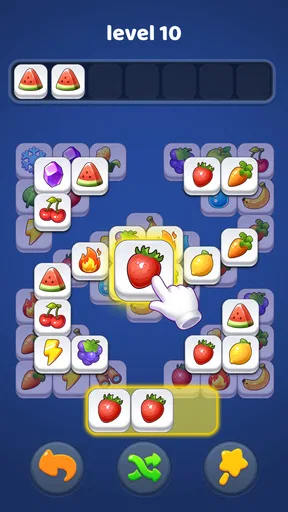
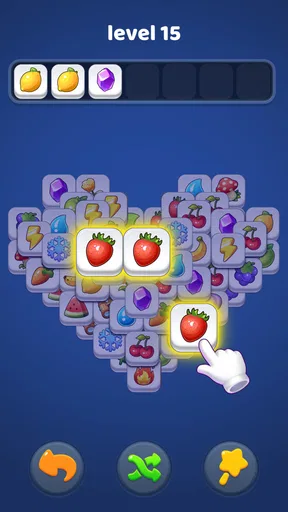
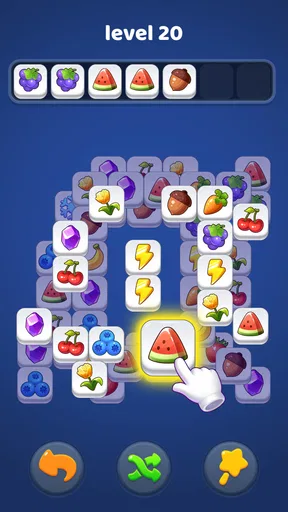


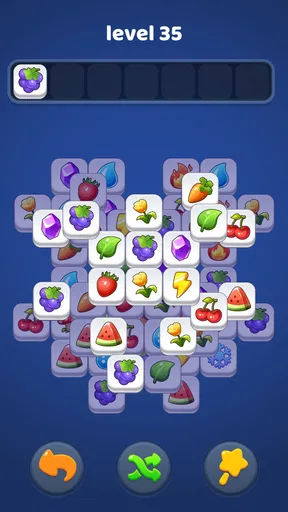
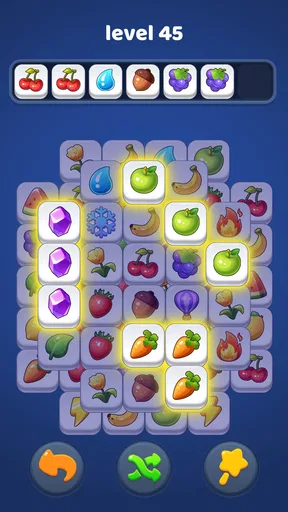
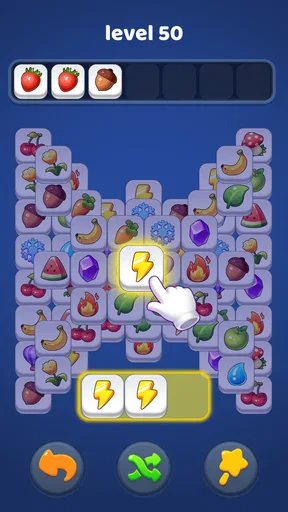
Our Review of Tile Clear - Puzzle Game
 Analysis by Appyee
I went into Tile Clear expecting a familiar matching game, but its appeal became clearer after a few rounds: the pleasure comes from making a small decision, watching the board respond immediately, and then deciding whether I can create an even cleaner chain. It is a puzzle game from Cedar Games Studio built around triple-tile matching, with a deliberately focused identity rather than a collection of unrelated modes.
The basic action is easy to understand. I look across the available tiles, choose matching symbols, and try to form groups of three so they disappear and make room for the next choices. That simplicity is important because the game does not ask me to learn a complicated control scheme before the puzzle becomes enjoyable. I can start quickly, but the board still gives me enough room to make mistakes, hesitate, and discover a better order of moves.
Tile Clear is free to play and suitable for Everyone, which makes it an easy recommendation for short breaks or casual play at home. It runs on Android devices using version 7.1 or later, and the current version is 1.23.0. The game was released on January 14, 2026, and its large audience already includes over 10 million installs. Those details do not change the core experience, but they do make it clear that this is intended to be accessible rather than a niche puzzle experiment.
Why the first move matters more than it seems
My first useful lesson was not to grab every obvious pair as soon as I saw it. The goal is to complete triples, so a tempting match can be a poor opening if it blocks the third tile or leaves an awkward arrangement underneath. I started getting better results when I scanned the whole visible area before touching anything, looking for groups that would both clear space and preserve options.
That small habit gives the game more thought than its cheerful, straightforward presentation suggests. I am not solving a long logic problem on paper, but I am constantly weighing immediate progress against future flexibility. A move that clears tiles now may expose something valuable; another may simply remove a convenient option and make the next few decisions tighter.
The controls feel best when I treat each tap as part of a sequence rather than an isolated action. I choose one tile, then another with the same design, and finally search for the third. When the set is complete, the clear animation provides an instant confirmation that the decision worked. That action-feedback connection is the foundation of the entire game, and it is strong because the result is visible without requiring a separate score screen or complicated explanation.
For a new player, I would recommend slowing down during the opening moments of a board. The first few selections often determine how much room remains later. Instead of chasing the most noticeable symbol, I look for tiles that are easy to complete and tiles that may be covering other useful choices. This is one of the more practical ways to avoid turning a manageable puzzle into a forced restart.
Reading the board before spending a move
The most effective approach I found was to separate observation from action. I first identify all the symbols that appear in groups of three or close to three, then consider which removal will reveal the most useful area. This is especially helpful when several possible matches look equally attractive. The best choice is not always the one that disappears fastest; sometimes it is the one that keeps two other groups available.
That makes Tile Clear a good fit for people who enjoy light planning without wanting the pressure of a traditional timed puzzle. I can play carefully, but the game does not require me to build a large strategy tree before making progress. The decisions stay small enough for casual play while still rewarding attention.
There is also a useful mental split between safe moves and risky moves. A safe move completes a visible triple and leaves several alternatives. A risky move uses a tile that might be needed elsewhere or clears a group before I understand what it will expose. I found myself using safe moves early and saving risky choices for moments when the board had fewer possibilities. That simple rule made losses feel more like a result of my choices than random bad luck.
The feedback rhythm keeps the puzzle moving
What makes the loop satisfying is the short distance between action and response. I tap, the matching group clears, the board changes, and I immediately have a new question to answer. There is no long interruption between decisions. The reward is not only the disappearance of three tiles; it is the sudden creation of space and the new pattern that appears because of it.
This rhythm works particularly well during a spare minute. Imagine waiting for a coffee or taking a short break between tasks. I can open a board, make a handful of considered choices, and feel that I have completed something even if I do not stay for a long session. The game does not demand a large commitment before it starts delivering its central pleasure.
The feedback also helps me understand mistakes. If I clear a group and leave a cramped selection of unrelated tiles, the board communicates that problem immediately. I do not need a detailed tutorial explaining every consequence. The changing arrangement shows me what my previous move created, and that visual information becomes useful on the next turn.
At the same time, the simplicity can become a limitation. Players who want a deep campaign, a strong story, or several distinct puzzle systems may find the repeated matching structure narrow. The game knows what it is trying to do, and that focus is a strength for fans of triple-tile puzzles, but it may feel repetitive to someone who needs constant mechanical change.
Where the satisfying moments come from
The best moments happen when one clear creates a chain of better choices. I remove a group, notice that another triple is now accessible, clear that one, and suddenly the board feels less crowded than it did a few seconds earlier. The reward is partly visual and partly strategic: I see progress while also recognizing that my earlier decision made the later one possible.
I also like the quieter satisfaction of recovering from a messy position. A board does not always look promising after an imperfect move. Instead of abandoning it immediately, I can search for a less obvious triple and rebuild some breathing room. That recovery process gives the game more character than a simple “spot three identical pictures” activity.
For younger or less experienced players, the clear cause-and-effect may be the main attraction. For adults, the same system works as a low-pressure way to occupy the mind. I would not describe it as a demanding brain-training tool, because its purpose is entertainment rather than formal practice. Still, it encourages visual scanning, short-term planning, and awareness of consequences in a pleasant, approachable format.
The game’s average rating is 4.9 from around 226 thousand ratings, with 885 written reviews. I see that reception as consistent with the focused loop: people who want a clean matching experience are likely to appreciate how quickly the game communicates progress. I would not treat the rating as a guarantee that every player will enjoy it, because puzzle preferences vary sharply, especially when someone is looking for variety instead of repetition.
How the reward changes the way I play
Tile Clear rewards patience more than speed. There is a natural temptation to tap the first matching tiles I notice, especially when the board presents several obvious options. But the stronger reward comes from making a choice that improves the next few choices. When I pause and plan a little, a clear feels earned rather than automatic.
That creates a useful balance between relaxation and concentration. I can play casually when I only want a simple distraction, or I can become more deliberate when I want the puzzle to hold my attention. The same board structure supports both moods. I do not need to turn every session into a serious challenge, but I can still engage with the arrangement more thoughtfully when I choose.
One practical technique is to prioritize triples that remove clutter without consuming a rare-looking tile. If a symbol appears in several places, I may leave one copy available while clearing a group that opens the board. This is not a complicated system, but it changes the order in which I approach the puzzle. The game becomes less about recognizing identical images and more about managing the supply of useful options.
Another technique is to avoid mentally treating every visible tile as equally available. Some choices may be easy to tap but strategically awkward because they do not improve the surrounding arrangement. I get better results when I ask what the board will look like after the clear, not just whether the current group can be completed.
Free access and the question of spending
The game is free to download, while optional in-app purchases range from $0.99 to $44.99 per item. That matters because the basic appeal should be judged separately from any desire to buy extras. I would begin as a free player and see whether the short matching sessions fit my habits before spending anything.
For families, the Everyone rating makes the game approachable, but I would still set a clear rule about purchases on a shared device. A simple puzzle can be suitable for a broad audience while optional spending remains something adults should manage. The price range means that not every purchase carries the same commitment, so checking the purchase prompt carefully is sensible.
My main trade-off is straightforward: the free entry makes it easy to try, but players who dislike any purchase prompts may prefer a paid puzzle with a single upfront cost. On the other hand, someone who wants to sample the experience without committing money may find this model more convenient. The right choice depends less on the matching mechanics and more on how strongly you prefer a one-time purchase model.
When a session ends and why I start another
The reset is an important part of the loop. After a board becomes too constrained or I make a sequence of poor choices, beginning again gives me a clean arrangement and a chance to apply what I just learned. I do not experience the restart as a heavy penalty because the individual decisions are quick and understandable. The next board feels like an invitation to improve my order of moves.
This is why the game works well in repeated short sessions. I can stop after a successful clear, or I can immediately try again because I believe one different opening would produce a better result. The desire to replay does not come from a story cliffhanger; it comes from the feeling that the previous outcome was close enough to improve.
A realistic everyday use is a short evening wind-down. I might play one board while listening to music, then stop when I feel ready to put the phone away. On another day, I may use it during a commute or a waiting period and restart once or twice because I want to test a more careful opening. The game supports those small windows without demanding that I remember a complicated plot or return to a large map.
There is a downside to this reset structure. If you need a strong sense of permanent progression, character development, or a campaign that changes dramatically from one stage to the next, the reason to continue may feel too modest. The motivation is local and immediate: solve this arrangement, then see whether the next one is more satisfying. That is enough for me in a casual puzzle, but not for every type of player.
Who should choose it, and who should look elsewhere
I would recommend Tile Clear to someone who likes visual matching, short sessions, and puzzles that are easy to start but reward a little planning. It is especially suitable for players who enjoy the calm repetition of clearing a board and improving their decisions over several attempts. Its age rating and low barrier to entry also make it a reasonable option for mixed-age households, provided adults handle purchase settings.
I would point a different player toward another puzzle style if they want wordplay, physics, narrative discovery, or increasingly complex rule sets. A traditional match-three game may be better for someone who enjoys cascading combinations and power-ups, while a sudoku-style title may suit someone looking for a more formal logic challenge. Tile Clear is more immediate and tactile, but it is also more narrowly focused than those alternatives.
Compared with ordinary match-three games, the emphasis here is on forming exact groups of three rather than building elaborate chains through a grid. That makes each selected tile feel more consequential. Compared with a classic mahjong-style matching game, the presentation is easier to approach because the central task is communicated through a compact, direct loop rather than a broader collection of conventions. The trade-off is that players who enjoy layered systems may find fewer ways to vary their approach.
My verdict on the complete action-to-restart loop
After spending time with it, I see Tile Clear as a focused puzzle game that understands the value of a clean loop. I choose a tile, complete a triple, watch the board open up, and use that new space to plan the next move. When the arrangement goes wrong, I reset and try a different order. That sequence is simple, but the immediate feedback gives each decision enough weight to remain engaging.
The strongest quality is its accessibility without making every move meaningless. New players can understand the objective almost instantly, while experienced players can improve by considering space, future access, and the difference between a safe clear and a risky one. The most useful habit is to scan before tapping; the most important trade-off is accepting that the game’s narrow focus is both its identity and its main limitation.
Cedar Games Studio has made a free puzzle for people who want satisfying, repeatable sessions rather than a large adventure. The 4.9 average and broad install base suggest that this approach resonates with many players, but I would still judge it by your preferred kind of variety. If you want a dependable triple-matching routine that fits naturally into spare moments, Tile Clear is easy to recommend. If you need a story, extensive progression, or several radically different modes, its focused design may leave you looking for another game after the novelty fades.
My final view is positive, with one clear condition: enjoy the act of arranging and clearing tiles for its own sake. The reward is the board becoming manageable, the reset is quick, and the reason to begin another session is the chance to make a cleaner set of decisions. For that specific mood, Tile Clear delivers a satisfying puzzle loop without unnecessary complexity.
Verdict
Strengths of Tile Clear - Puzzle Game
- Simple tap-to-match gameplay is easy to learn and enjoyable for all ages.
- Short levels make it convenient for quick breaks or casual play.
- Bright tile designs and smooth animations create a pleasant visual experience.
- Increasing difficulty keeps the puzzles engaging as you progress.
- Offline play lets you enjoy many levels without a constant internet connection.
Limitations of Tile Clear - Puzzle Game
- Frequent ads may interrupt gameplay, especially between completed levels.
- Some puzzles can feel repetitive after extended playing sessions.
- Later stages may rely more on trial and error than strategic planning.
- Extra moves or helpful items may be limited without optional purchases.
- The game may become less challenging for experienced puzzle players over time.
Other Releases by Cedar Games Studio
View All
Mystery Town: Merge Games
Puzzle4.8

Word Sort Fun!
Word4.0
Similar Picks in This Category
View All
Block Blast!
HungryStudio4.8

Braindom: Brain Games Test
Lahana Game Studio4.6

AMAZE!
CrazyLabs LTD4.6

Sudoku - Classic Sudoku Puzzle
Oakever Games4.7

Art Puzzle - Puzzle Games
Easybrain4.8

Amaze GO!
Oakever Games4.9
Frequently Asked Questions
What is Tile Clear - Puzzle Game, and how do you play it?
Tile Clear - Puzzle Game is a casual tile-matching game built around clearing groups of identical tiles from the board. During a level, you generally tap or select matching tiles according to the game’s rules, create combinations, and remove them before the available moves or space runs out. The controls are easy to understand, but later stages usually require more planning and careful sequencing.
Is Tile Clear - Puzzle Game suitable for beginners and casual players?
Yes. The game is designed to be approachable, with simple touch controls and puzzle mechanics that can usually be learned within the first few rounds. It works well for short play sessions because levels can often be completed quickly. However, it is not limited to beginners: more advanced stages may introduce tighter layouts, limited moves, or obstacles that require patience and strategic thinking.
Does Tile Clear - Puzzle Game work offline?
Tile Clear - Puzzle Game may allow some core levels to be played without a continuous internet connection, which is useful when traveling or when mobile data is unavailable. Nevertheless, online access may still be needed for advertisements, cloud saving, updates, leaderboards, events, or in-app purchases. Because offline availability can vary by version and device, it is best to test the game after installation before relying on it without internet.
Are there advertisements or in-app purchases in Tile Clear - Puzzle Game?
Like many free-to-download puzzle games, Tile Clear - Puzzle Game may include advertisements and optional in-app purchases. Ads can appear between levels or when you request extra rewards, hints, or additional chances. Purchases may provide boosters, remove advertising, or speed up progress, depending on the current version. You can normally enjoy the basic gameplay without paying, but check the store listing and purchase settings before downloading.
What should I know about privacy, permissions, and device compatibility?
Before installing Tile Clear - Puzzle Game, review its current Google Play or App Store listing for supported operating-system versions, download size, age rating, and data-safety information. A simple puzzle game should not require unusually broad permissions, although it may request network access for ads, analytics, or account features. Privacy practices can change with updates, so read the developer’s policy and avoid granting permissions that do not seem necessary.
Play our best games!


